Making visible the
sophisticated patterns
in neurodivergent communication
By Ana María B. Call, a neurodivergent linguist, interculturalist, & former civil rights worker.
Revealing the coherence and sophistication of neurodivergent communication, so it can be respected rather than corrected
By Ana María B. Call, a neurodivergent linguist, interculturalist, & former civil rights worker.

We cannot live securely in a world which is not our own, in a world which is interpreted for us by others. An interpreted world is not a home.
Part of the terror is to take back our own listening, to put our ears to our own inner voices, to see our own light, which is our birthright, and comes to us in silence.
Elaine Bellezza (source)
Reclaiming
My vision & core questions
Communication
What if neurodivergent communication isn't something to fix? What if, instead, we approach cross-neurotype communication the same way we approach any intercultural exchange: with curiosity, mutual respect, and shared responsibility for making it work?
Most conversations about neurodivergent communication focus on getting one person to change—usually the neurodivergent one. But when we stop asking "what's wrong?" and start asking "what's actually happening here, and how can we all participate more skillfully?", then communication becomes a more satisfying, collaborative activity that yields better outcomes for all.
In fact, fields that specialize in studying communication, like linguistics and intercultural communication, understand that real-world, effective communication relies not on masking or assimilation to norms, but on concrete interactional skills like:
Transparency about different styles and needs rather than hiding or guessing
Context-checking instead of making assumptions about what others want or expect
Repair that acknowledges breakdowns as normal and fixable, not personal failures
Negotiability that treats communication norms as something we create together, not fixed rules
Mutual adaptation where everyone adjusts to make it work, not just one person
When we recognize that gifted and autistic people think, process, and express themselves in fundamentally different ways—and that these differences are sophisticated and purposeful, rather than deficits—we can develop communication skills that actually work for everyone involved.
I'm fascinated by the questions this opens up:
How do different neurotypes create meaning together?
Can neurodivergent people become skillful at being different in communication?
What can we learn when we expand our view of neurodivergent communication from one of a strictly personal pragmatic deficit, to that of interpersonal pragmatic misalignment?
These aren't just academic questions—they're invitations to reimagine how we connect with each other, and opportunities to use communication as a more effective tool for creating belonging, justice, and neurodivergent thriving.

Get a freebie when you subscribe
text here
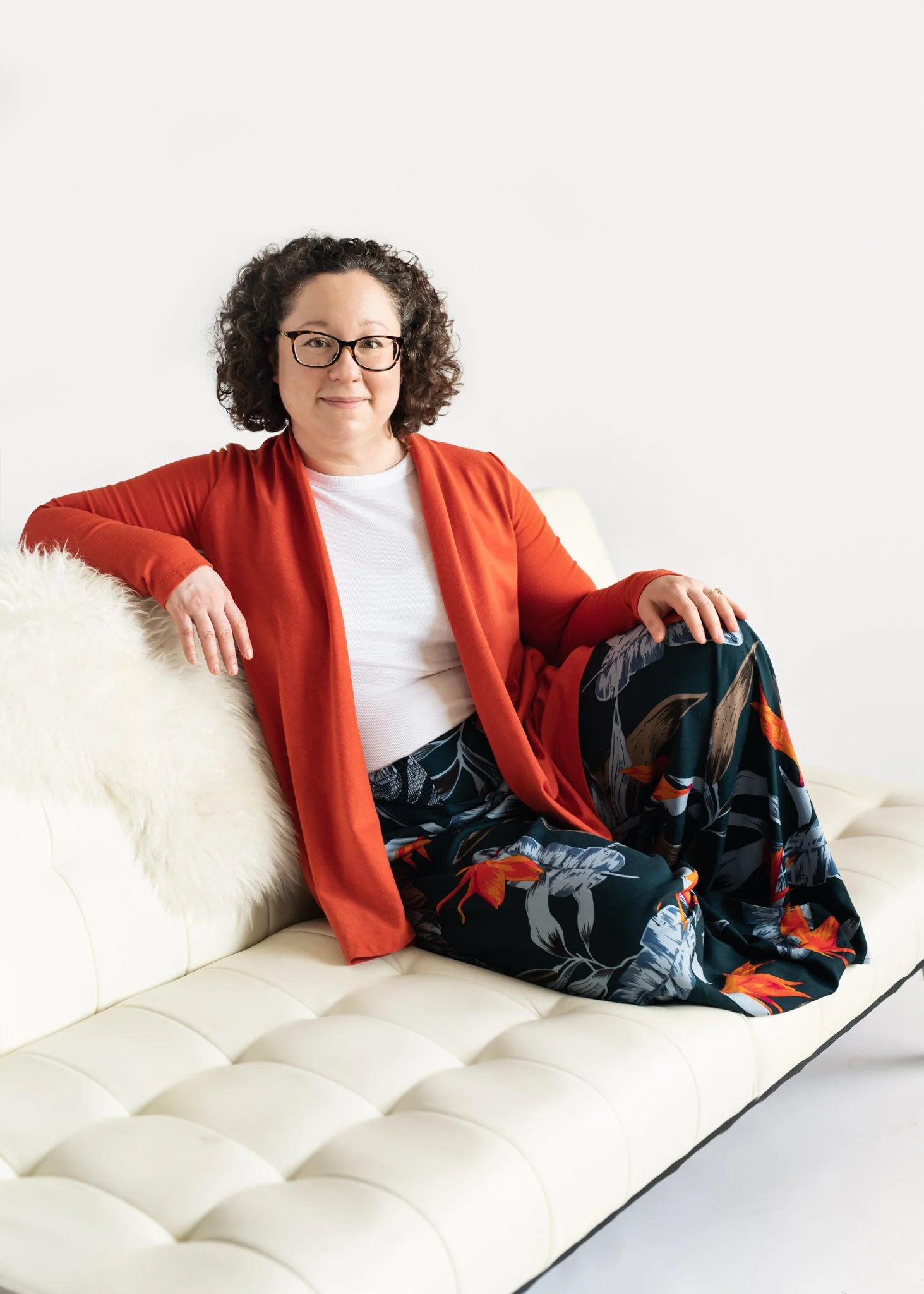
Ana María B Call, MA
Communication Scholar & Community Educator
I'm a 3E (Gifted + autistic + Latina) linguist, interculturalist, and former civil rights worker, specializing in neurodivergent communication as intercultural communication.
My work synthesizes tools and research across linguistics, interpretation, intercultural communication, and language access to build more accurate, effective frameworks for understanding and facilitating cross-neurotype communication.
My expertise stems from a graduate degree in linguistics, as well as 10+ years experience facilitating communication across differences, and building systems inside organizations to identify and reduce communication barriers to equal access.
As a neurodivergent scholar and parent, I approach this work with both rigor and lived understanding of what's at stake when communication systems fail to account for neurodivergent ways of being.
Disciplines I Integrate:
Sociolinguistics & Applied Linguistics
Intercultural Communication Theory
Language Access per Title VI of the US Civil Rights Act
Interpretation Studies
Futures Thinking & Imagination Work

approach
My unique
My work is founded on the single most important observation I’ve made about communication as a multiply-neurodivergent linguist and interculturalist…
Inside the “bubble” of a communication event, gifted and autistic traits function as a culture- a unique way of sensing and making sense of the world- NOT a deficit or disorder.
This means that the most effective ‘tools’ available to navigate neuro-differences in communication are actually best informed by communication theory and intercultural skills, not behaviorism or simply social skills. For this, I integrate my academic and professional backgrounds in linguistics, intercultural communication, and language access (civil rights related to communication).
But, there’s more.
At its core, communication is a co-creative event- a collaborative shaping of meaning and ideas, an access point for connection and belonging, and an exercise in creative space-holding.
For this, we need imagination skills.
I integrate into my work sci-fi, magical realism, futurist/punk, and other literature genres, movies, and television shows. I also employ imagination work, gentle protest, and teaching artistry as methods for navigating the systemic dimensions and impacts of communication.
At the end of the day, my approach to this work is not about prescriptive rules. It’s about developing your own sophisticated communicative practice that allows you to skillfully navigate the invisible dimensions of communication while also protecting neurodivergent needs and respecting preferences.

Who
this work is for
-
This work is designed for gifted, autistic, and 2E+ professionals—people who've often been told they're "capable enough not to need support" while privately exhausted by the cognitive load and inconsistent results of masking.
If you can usually "pass" when needed but know that masking isn’t enough...
If you think in frameworks, patterns, & systems and need approaches that match that complexity...
If you're tired of performing communication without actually understanding how it works...
…then this work might be for you.
You're not looking for social skills training or behavioral modification. You're looking for linguistic frameworks that help you understand what's happening and develop genuine communicative competence—not performance of neurotypical norms.
-
This work is for providers, educators, and organizational leaders who've recognized that deficit-based frameworks aren't working—but haven't found theoretical alternatives rigorous enough to replace them.
You think systemically, and seek approaches grounded in actual communication theory, not simplified behavior management techniques. You're ready to understand the underlying dynamics of cross-neurotype communication rather than just implementing another round of "interventions" without knowing why they fail.
You've seen the limitations of pathology-correction models. What you need are linguistic and intercultural frameworks that explain what's actually happening—and that offer paths toward genuine cultural competence in neurodivergent communication.
If this describes where you are, this work might be for you.
engage
Ways to

Read the blog
Start learning about the invisible dimensions and systems inside communication, and how we can reimagine new, life-giving ways to connect and collaborate across neuro-differences.